A county in the north of Sweden
The History of Västernorrland
Before the mysteries, there was the land itself. This is how Västernorrland came to be — from the ice sheet's retreat to the shots in Ådalen, told in nine short chapters.
- 01
Before everything
The land that rose from the sea
When the last ice sheet released its grip on Norrland, the land began to rise — and it has never stopped. Along the High Coast, the shoreline climbs by roughly eight millimetres every year, among the fastest land uplift on Earth. Harbours of the Viking Age now sit far inland, and hills that were once islands in a cold sea carry the memory of waves on their summits.
Everything that follows happened on this moving stage. The sea gave the county its fish and its routes; the rivers — Ångermanälven, Indalsälven, Ljungan, Ljusnan — cut the valleys where people would settle; and the forest, endless and dark, provided both terror and fortune.
- 02
c. 4000 BC
Six thousand years of carvings
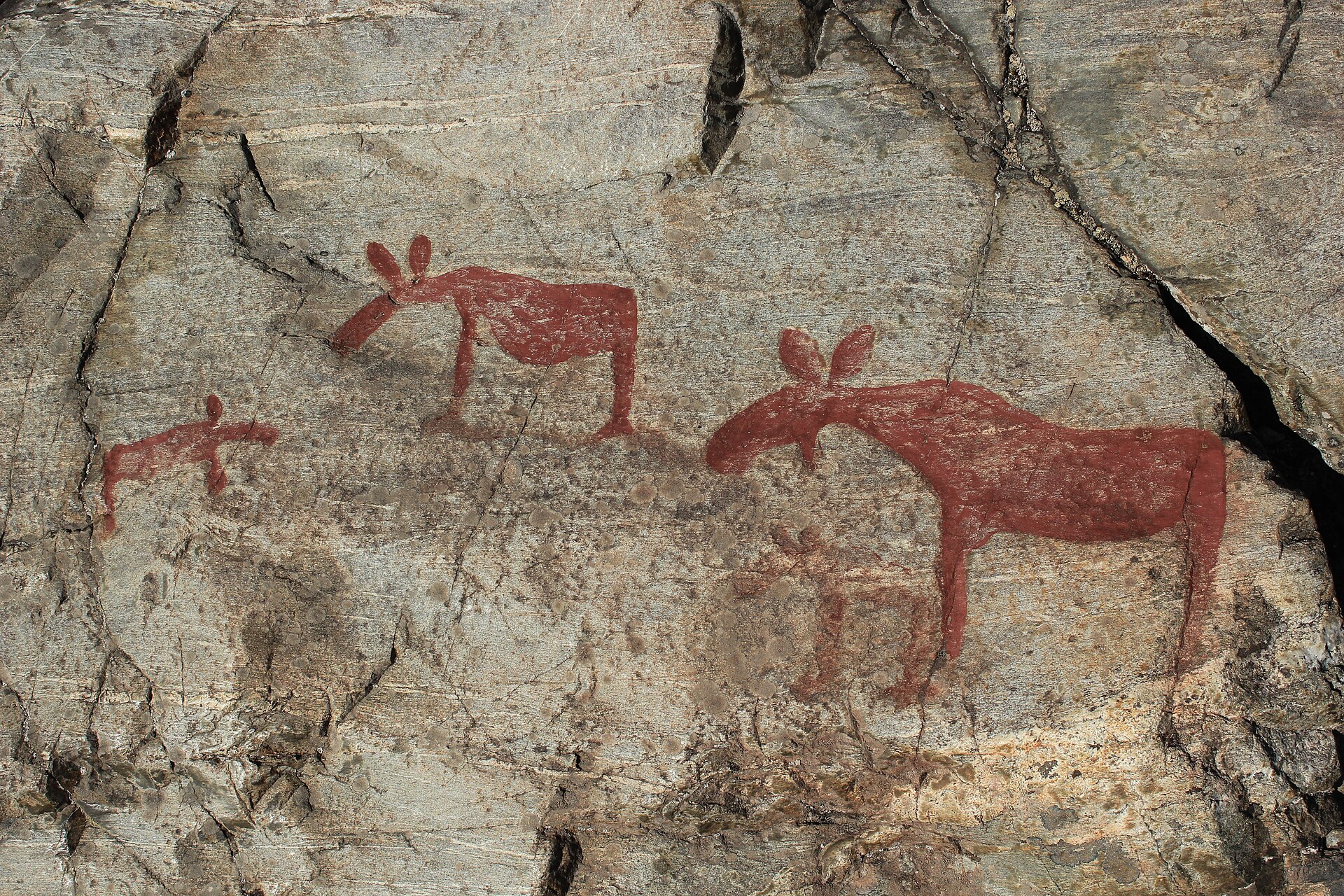
Elks carved into the rock at Nämforsen, pecked into the stone some six thousand years ago.
Photo: Fjallvaxter.och.norrsken / Wikimedia Commons (CC BY-SA 4.0)
Long before Sweden existed, people stood on the rocks by the rapids at Nämforsen and pecked images into the stone. More than two and a half thousand carvings survive — elks, boats, hunters, footprints, and figures nobody has ever fully explained. It is one of the largest rock carving sites in northern Europe, made by hunting peoples who lived along the river when the sea reached much further inland.
Whatever the carvings meant — hunting magic, maps, prayers — they mark the beginning of recorded presence in this landscape. People have been watching this river for six thousand years. Some would say the river has been watching back.
- 03
The Middle Ages
Faith on the riverbank
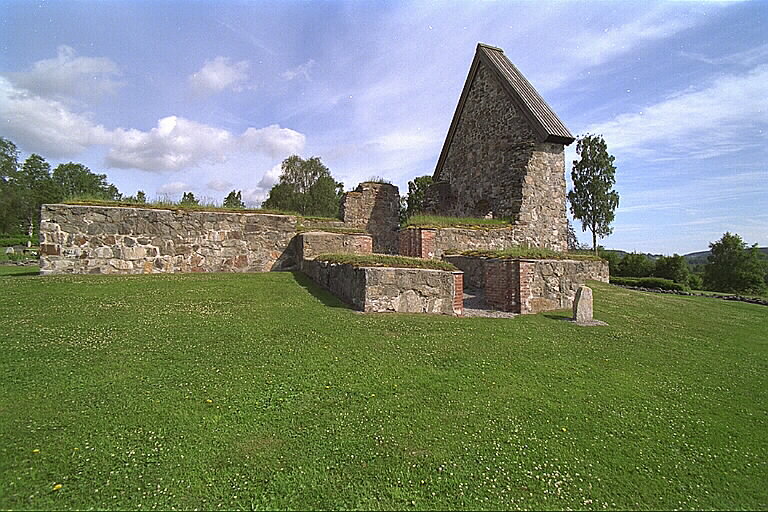
Selånger church ruin — a medieval church by the estuary, near the site of the old Selånger assembly.
Photo: Bengt A Lundberg / Swedish National Heritage Board (CC BY 2.5)
Through the Middle Ages the coast was Christianised parish by parish. Churches rose at Selånger, Njurunda, Tuna and Sättuna in Medelpad, and along the great river in Ångermanland. Selånger was also a thingstead — a place of law — where the coastal communities gathered to settle disputes long before any county governor existed.
The land belonged then, as the provinces still remember it, to Ångermanland in the north and Medelpad in the south — with borderlands of Jämtland, Härjedalen and Hälsingland at the edges. The county would come later. The river valleys were here first.
- 04
1654
The county is born
Västernorrland County — Västernorrlands län — was created in 1654, when the crown carved new administrative counties out of the enormous Norrland territories. Its seat was placed at Härnösand, a small town on an island in the Ångerman estuary, which grew into a cathedral city and a centre of learning for the whole of northern Sweden.
The county was then far larger than today: in 1762 its northern half was split off to form Västerbotten County, leaving Västernorrland roughly in its modern shape — Ångermanland, Medelpad, and slices of the inland provinces. 'Västernorrland' is a young administrative name for very old ground: it simply means 'the western part of the Northland.'
- 05
1719–1721
The burning coast
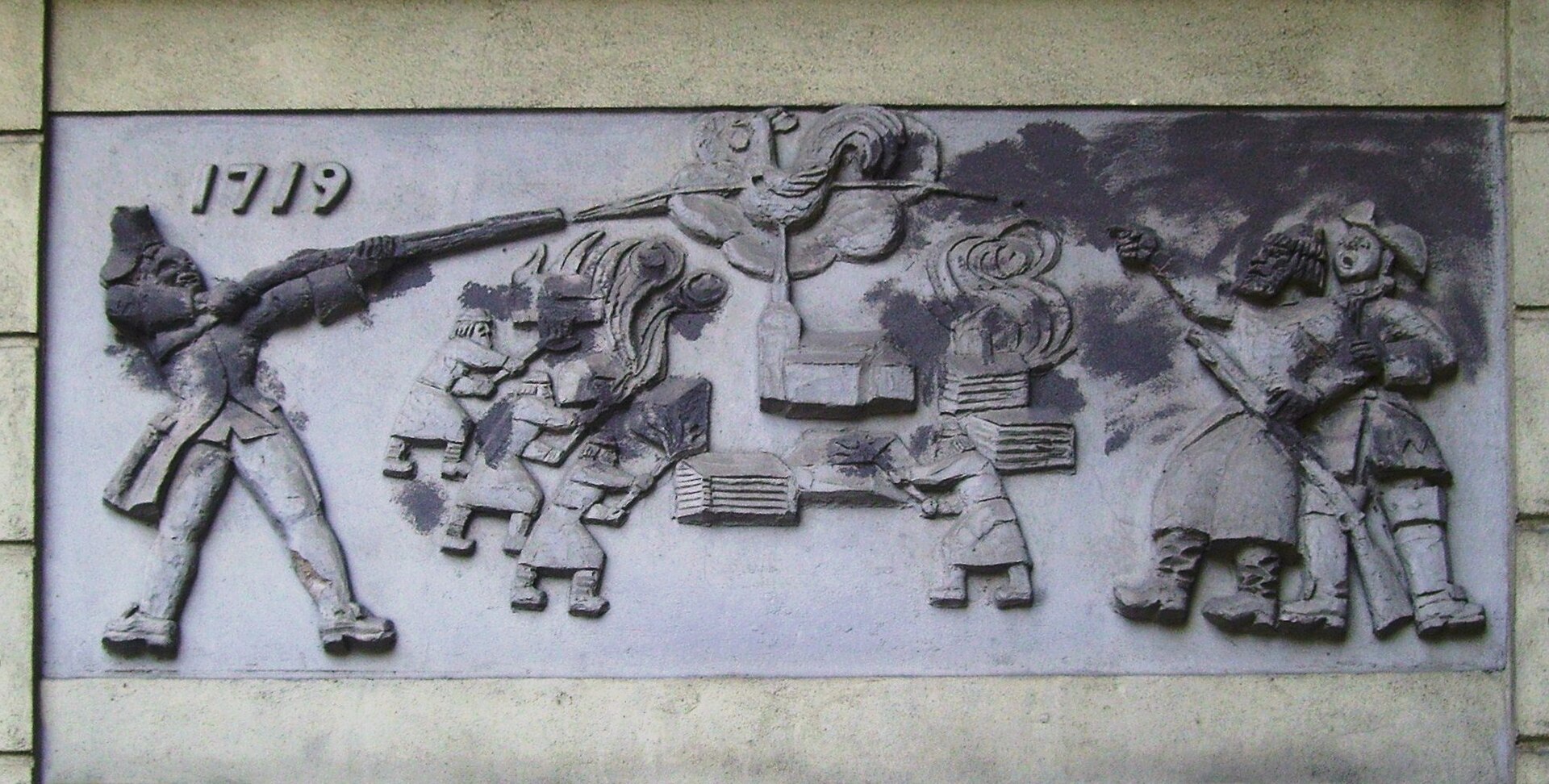
Memorial of the rysshärjningarna — the Russian ravages along the Bothnian coast, 1719–1721.
Sculpture by Hugo Borgström (1940), photo: Raphael Saulus / Wikimedia Commons (public domain)
In the final years of the Great Northern War, Russian galley fleets swept along the Bothnian coast in what Swedes still call rysshärjningarna — the Russian ravages. Towns and villages from Gävle to Umeå were burned. Sundsvall was put to the torch; churches were plundered; farms along the river valleys emptied as people fled into the forests.
The war's very last battle on Swedish soil was fought here: in August 1721, at Selånger, a makeshift Swedish force met a Russian landing party in a confused fight among the fields and the church village. Weeks later, peace was signed at Nystad. The coast had burned for three summers. The memory never entirely left it.
- 06
1849–1950
The timber kingdom
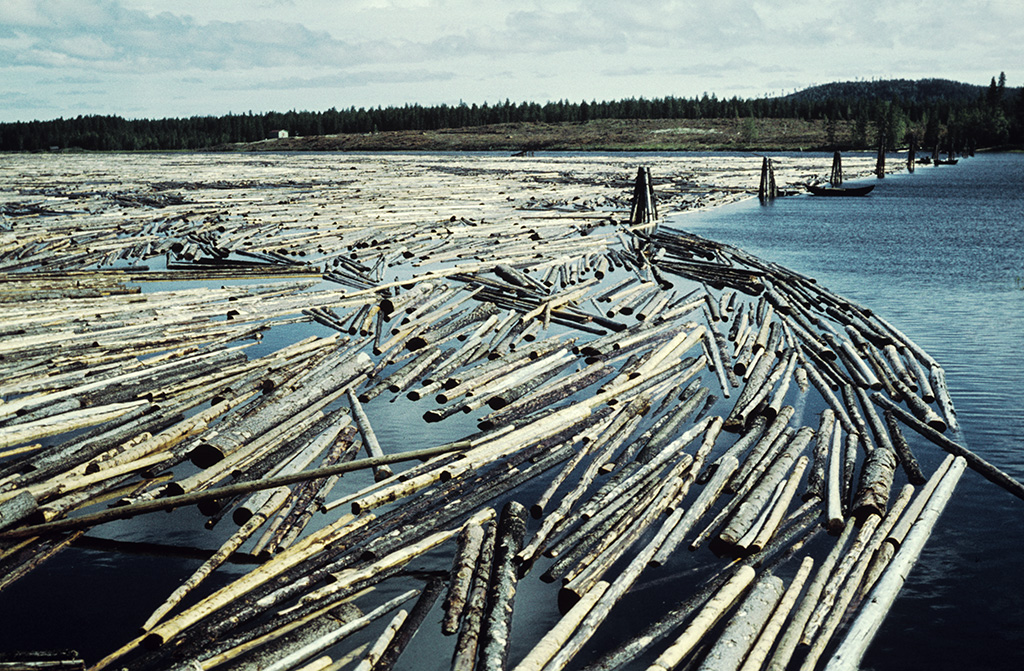
Timber floating on the Ångermanälven — the rivers were the highways of the timber kingdom.
Photo: Swedish National Heritage Board / Wikimedia Commons (no restrictions)
In 1849 the first steam-powered sawmill in Sweden started at Tunadal, just north of Sundsvall — and within a generation the coast exploded into one of the great sawmill districts of the world. English and Scottish capital arrived; sågverkspatroner, the sawmill barons, built palatial villas; and every spring the rivers filled with log drives carrying millions of logs down from the inland forests to the ships.
Sundsvall became, for a gilded moment, one of the richest towns in Europe per inhabitant. Around the mills and the ports, a working population gathered that lived hard, organised early, and would later make history of a darker kind. The wealth of the timber kingdom built the towns — and the tensions that would shake them.
- 07
25 June 1888
The night Sundsvall burned
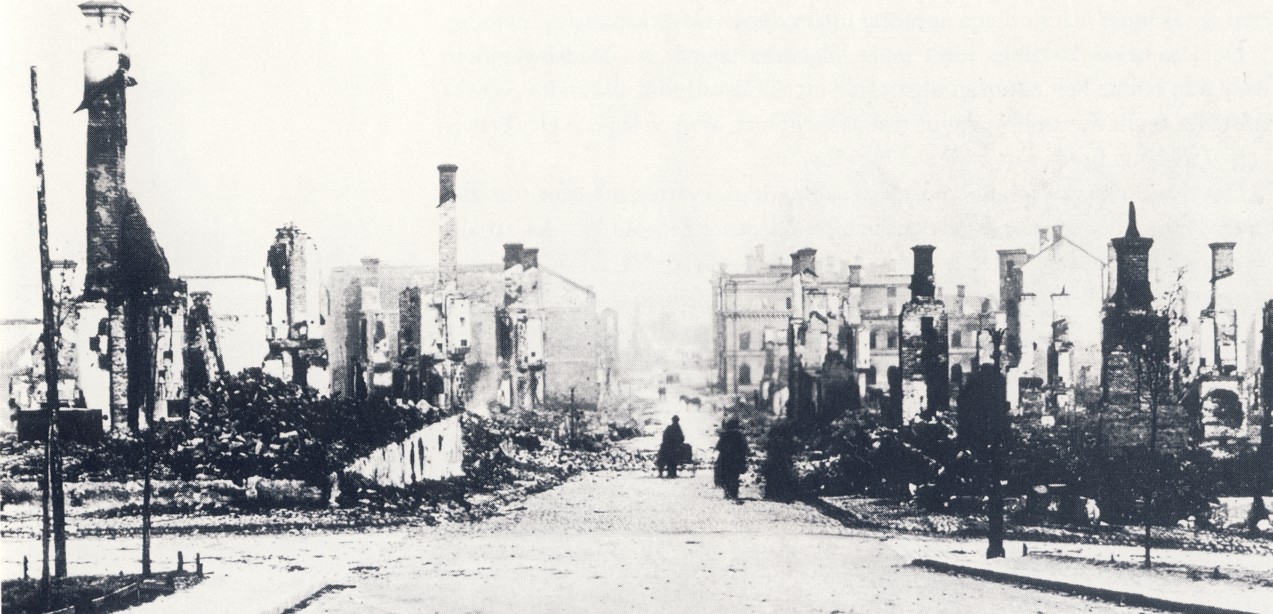
The great Sundsvall fire, 25 June 1888 — nine thousand people lost their homes in a single day.
Unknown author / Wikimedia Commons (public domain)
On a hot, dry day in June 1888, sparks from a steamship and a sawmill yard ignited the wooden city. Driven by wind, the fire consumed nearly all of Sundsvall in hours — the largest urban fire in Swedish history. Some nine thousand people were left homeless, watching their timber-built town turn to ash on the same hills that had watched it grow rich.
The answer was Stenstan — the Stone City. Insurance money and timber profits rebuilt the centre in stone and brick, with wide esplanades designed as firebreaks and facades in neo-Renaissance splendour. The Sundsvall that stands today is, quite literally, a city built out of its own ashes.
- 08
The stone city
Stenstan rises
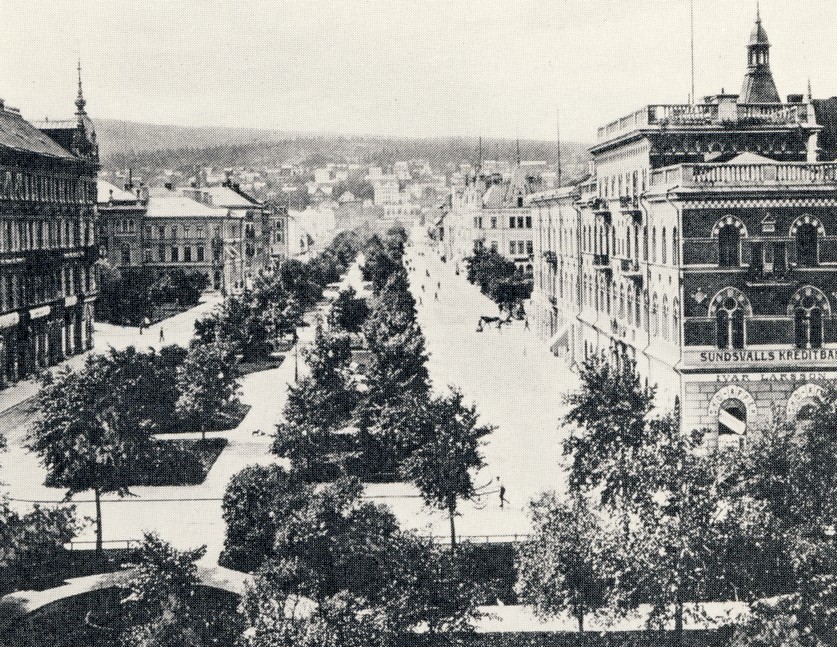
Sundsvall around 1890 — the stone city rising where the wooden town burned.
Unknown author / Wikimedia Commons (public domain)
Within a few years of the fire, Sundsvall's centre had been rebuilt in stone — banks, hotels and merchants' houses with towers and ornament, laid out along broad streets meant to stop fire from ever running again. Stenstan remains one of the most coherent stone city centres in Sweden, a monument to catastrophe answered with ambition.
- 09
14 May 1931
The shots in Ådalen
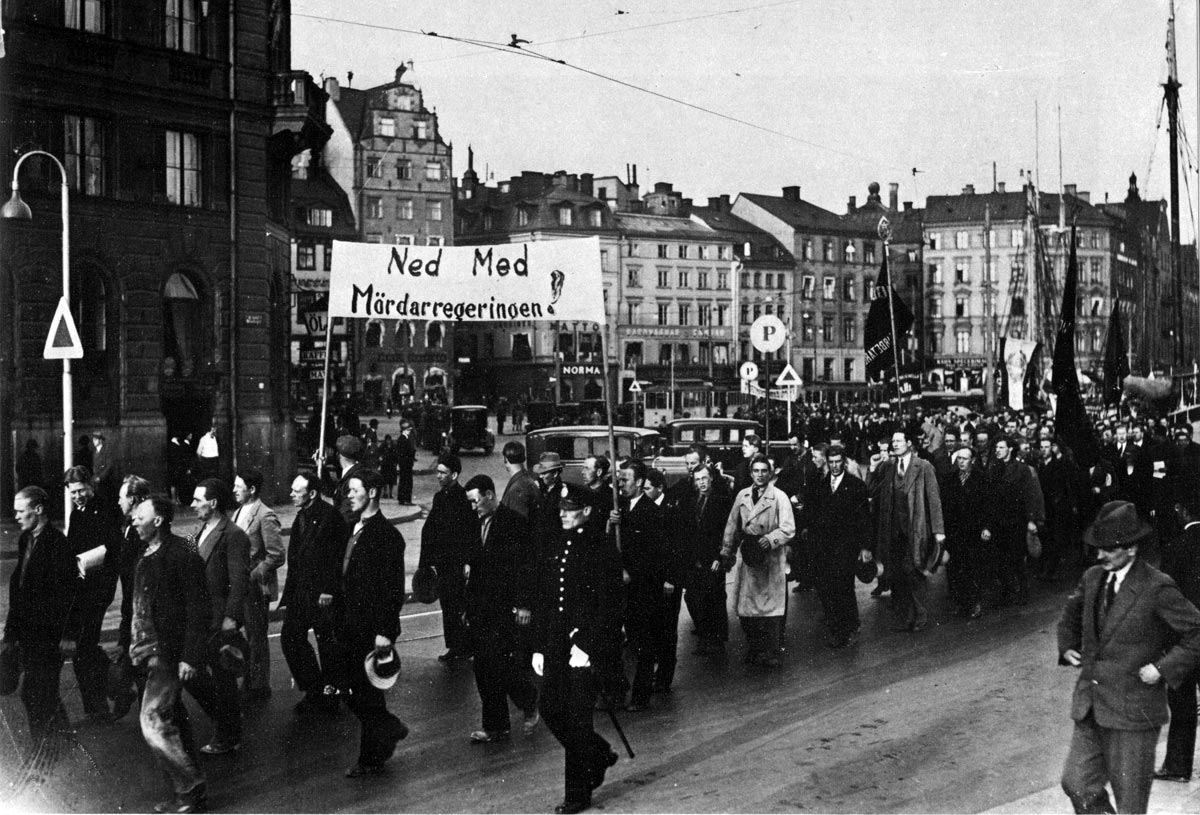
Stockholm, May 1931 — tens of thousands demonstrated after the shootings in Ådalen.
Unknown photographer / Wikimedia Commons (public domain)
In May 1931, during a strike in the sawmill district of Ådalen, a peaceful demonstration marched toward Lunde. Soldiers sent to protect strikebreakers opened fire on the crowd. Five people were killed — four workers and a young bystander — and five more were wounded. The shots echoed through Swedish politics for generations.
The outrage helped bring the Social Democrats to power the following year and cemented a new principle: military force would never again be used against striking workers in Sweden. The negotiations and agreements that built 'the Swedish model' grew, in part, out of the shock of Ådalen. The county's darkest day became one of the country's turning points.
- 10
Today
The county that remains
Modern Västernorrland is a county of around a quarter of a million people — Härnösand the seat, Sundsvall the engine, Örnsköldsvik, Sollefteå, Kramfors and Timrå strung along the coast and the rivers. The sawmills are fewer and automated; the log drives ended decades ago; the fortresses are museums. The forest remains.
And the older layers never went away. The carvings are still on the rocks at Nämforsen. The ruin still stands at Selånger. The mountains of the High Coast still rise from the sea, millimetre by millimetre, year after year — the slowest event in the county, and perhaps the only one that has never once paused.
Continue